FunTeam CRM joins the event business workflow around shared records. Employees can manage bookings and customers, follow payment-related state, inspect event economics and work with communications within the appropriate permissions.
One booking touches several parts of the business
A customer chooses an event, registers participants and pays. The team must confirm the booking, understand the customer context, see what remains unpaid and assess the event’s finances. FunTeam connects those activities instead of treating the website and internal operations as separate worlds.
FunTeam in everyday use
The working FunTeam interface. Names, contact details and figures shown on these screens are demonstration data.
The FunTeam interface is shown in Russian. Names and figures are demonstration data.
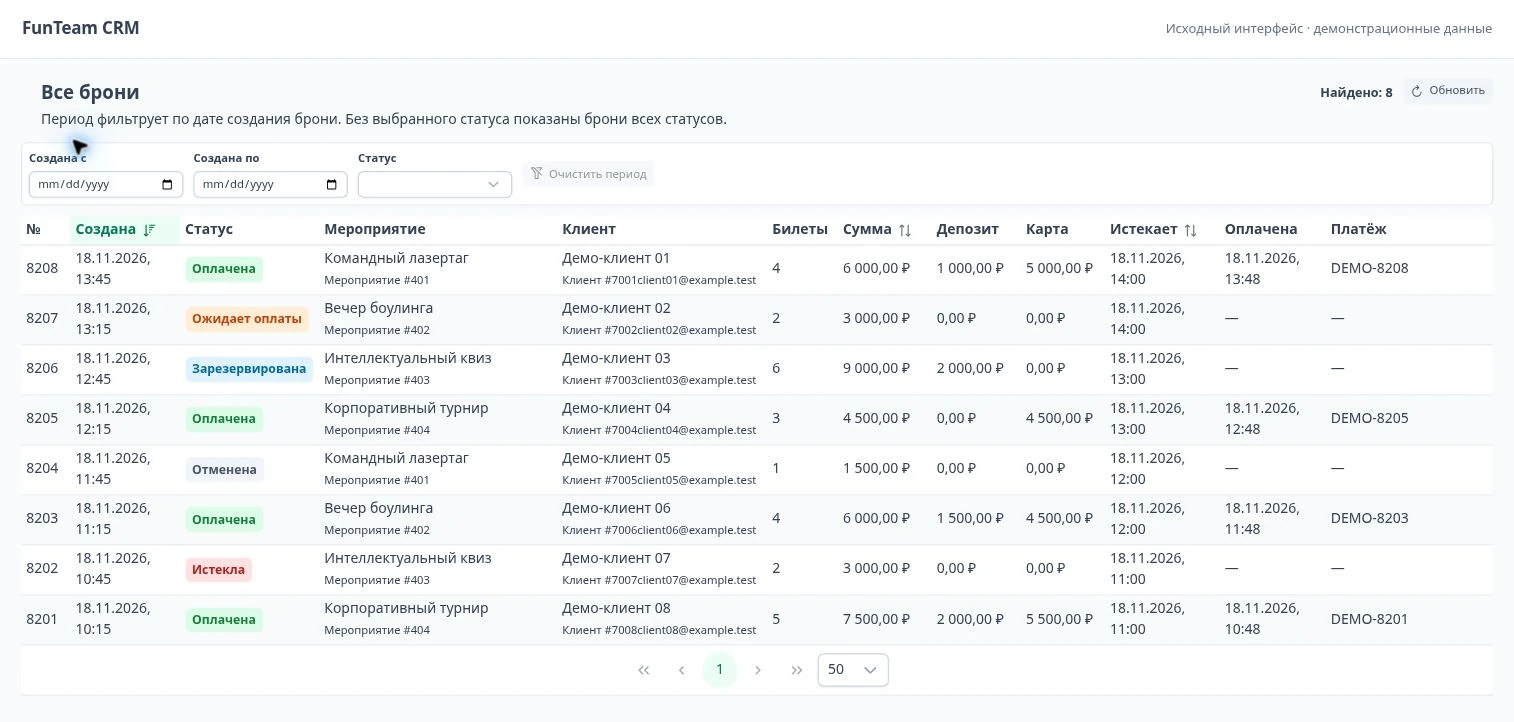
Bookings: see the next action
Date and status filters, event and customer links, tickets, payment-related fields and expiry information keep the booking process actionable.
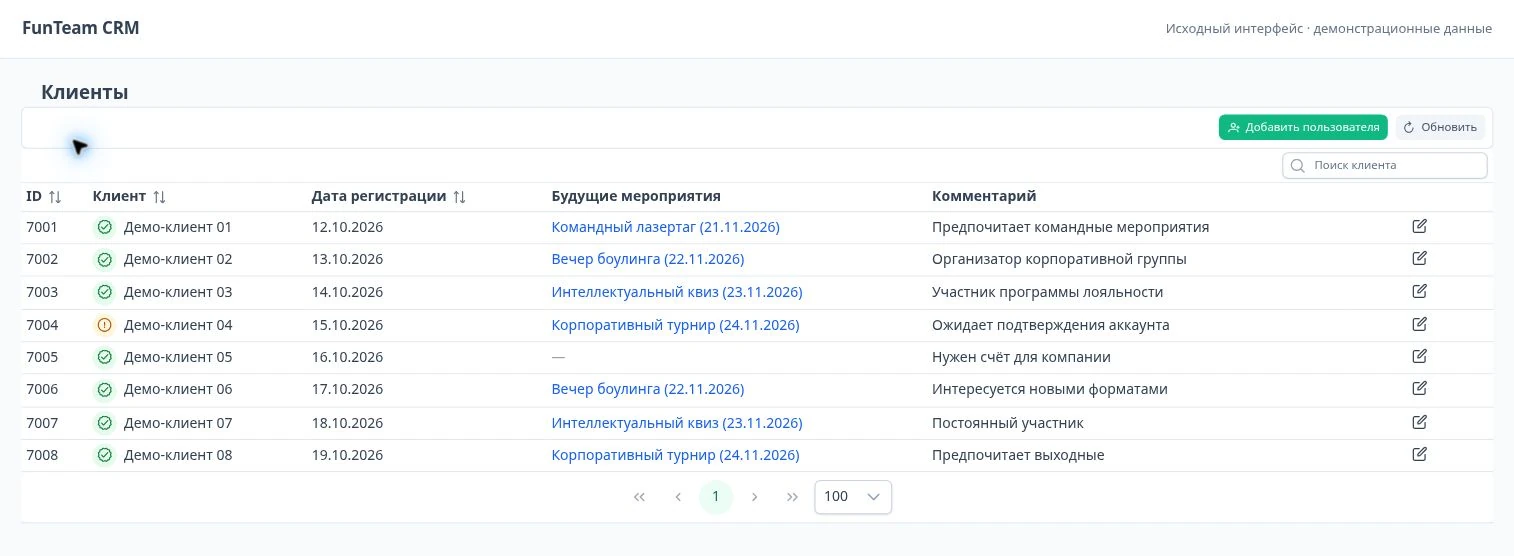
Clients: keep the context
Search, client information, registration state and upcoming events help employees continue the relationship from a shared record.
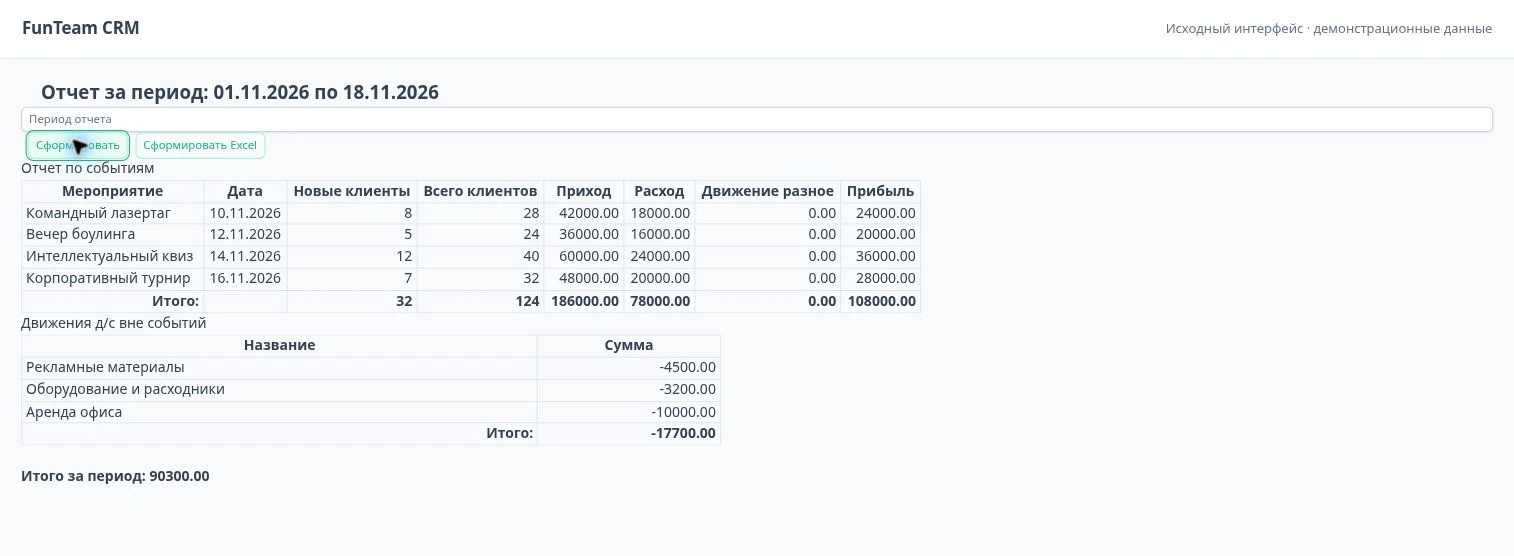
Event economics: understand the result
The report presents client counts, income, expenses, profit and other cashflow, with an XLSX export for further work.
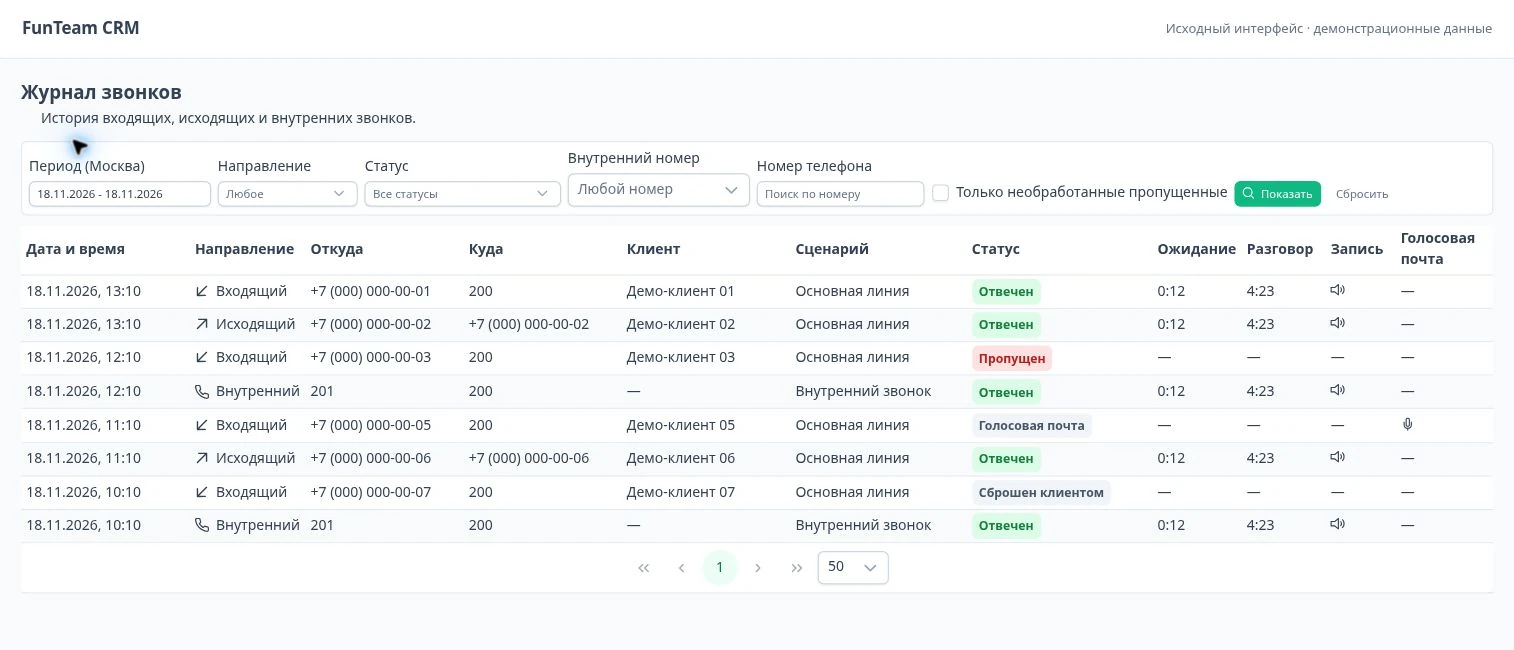
Calls: follow up in context
Call directions, missed and unhandled filters, customer links and recording permissions help employees manage the next conversation.
Bookings become an operational queue
The booking interface supports sorting by creation time, filters for dates and status, links to the event and customer, and ticket details. Deposit and card-related payment fields keep the financial context beside the booking.
For the employee
Employees find a booking by date or status, open the linked customer or event, and see its payment context in the same workflow.
For the manager
Managers can review incoming bookings and unresolved questions by date, event and status, making it easier to identify where the team needs to act.
The customer record connects repeat interactions
Client search and customer records connect a person to bookings and upcoming events. Registration state and related activity help employees use the existing context when a customer returns.
Continuity of service
The next employee can work from the same customer and booking history.
Repeat business
Upcoming events and past interactions provide context for a relevant conversation.
See the financial picture for each event
The financial report shows new and total customers, income, expenses, profit and other cash movements by event. XLSX export supports further analysis, while T-Bank acquiring, deposits and card payments connect the payment context to the booking.
For financial control
The manager can examine income, expenses and other movements for an event and identify records that need reconciliation.
For management decisions
Operational and financial figures sit together, supporting a review of participation, activity and the event result.
A call is part of the CRM workflow
The call journal brings together incoming, outgoing and internal calls. Employees can see linked customer records, waiting and talk times, and filter missed or unhandled calls. Access to call recordings follows employee permissions.
Follow up on missed calls
Separate calls requiring attention from the rest of the journal and keep the customer context close.
Review communication
Authorised employees can inspect the call circumstances and permitted recording when resolving a service question.
Inventory, loyalty and communication in one system
FunTeam includes inventory, loyalty, Telegram, website content and notification functions. Customer work and operational tasks share one system, making the relationship between an enquiry, an event and ongoing service easier to follow.
The team can follow the whole customer journey
A manager continues the conversation with booking and payment context, an organiser can see the upcoming work, and the business owner can examine event economics. Shared records preserve context when responsibility passes between employees.
- Each booking has a clear status and a link to its event.
- Customer history, booking details and payment information stay together.
- The call journal highlights conversations that need a follow-up.
- Event reporting explains the components of the financial result.